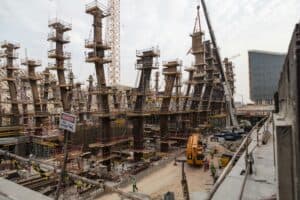

In real estate development, the most dangerous moment isn’t the beginning of a project, it’s the middle.
Permits are in place. Money has already been spent. Construction is underway, or nearly complete. And then financing stalls. A draw gets delayed. A lender pulls back. Costs rise faster than expected.
When a project is too far along to pause, hard money can be the difference between completion and distress.
Why Projects Stall Mid-Construction
Most projects don’t fail because the deal was bad. They stall because timing and capital fall out of sync.
Common causes include:
- Budget overruns from labor or material increases
- Delayed inspections or permit sign-offs
- The original lender refusing to fund remaining draws
- The borrower needing to accelerate completion to sell or refi
At this stage, traditional lenders are often reluctant to step in, even though the project is mostly built.
How Hard Money Solves the “Finish Line” Problem
Hard money lenders evaluate what exists today and what completion unlocks.
Instead of asking: “Would we have funded this from day one?”
They ask: “Does finishing this project create enough value to justify the loan?”
Hard money to finish construction is typically structured around:
- The current as-is value
- The cost to complete
- The as-completed value (ARV)
- A clear timeline to sale or refinance
This makes private capital uniquely suited for projects already in motion.
Ideal Scenarios for Finish-Construction Loans
Hard money is especially effective when:
- Construction is 50–95% complete
- Final inspections, finishes, or utilities remain
- A CO or final sign-off is close but not funded
- The borrower needs capital to cross the finish line
- The exit (sale or refi) is clear once complete
In markets like Los Angeles, San Diego, and the San Francisco Bay Area, getting to completion quickly can preserve, or significantly increase, property value.
How These Loans Are Typically Structured
Finish-construction loans are often short-term and tightly scoped. Common features include:
- Initial funding to pay off the existing lender (if needed)
- Remaining funds held in reserve and released in draws
- Interest-only payments
- 6–12 month terms
The goal isn’t to carry the loan, it’s to complete, exit, and move on.
What Brokers Should Emphasize
For brokers submitting these deals, clarity matters more than perfection.
Strong files clearly show:
- What’s already completed
- What remains to be done
- How much capital is required to finish
- How quickly the exit occurs after completion
Finish-line deals aren’t about speculation, they’re about execution.
Cost vs. Consequence
Yes, hard money costs more than traditional construction financing. But the real comparison isn’t rate vs. rate.
It’s:
- Cost of finishing vs. cost of stopping
- Value preserved vs. value lost
- Momentum maintained vs. project stagnation
In many cases, the cost of not finishing is far greater than the cost of private capital.
Final Thoughts
Projects don’t need perfect financing, they need sufficient, timely capital to reach completion.
Hard money loans designed to finish construction exist for one reason: to help borrowers cross the finish line when the project is already too far along to turn back.
Need a quote or second opinion? We offer free consultations for brokers and borrowers. Contact us here.
Curious about how we work? Check out our FAQ page for answers to common questions.
Where can you find us? Remember you can also find Vantex on Linkedin and X.