
Owner Occupied Bridge
Loans in California
- Close in as little as 7 days
- No minimum credit score required
- Faster approvals, fewer surprises
- Fix & flip, bridge, cash-out, & more
- Residential & commercial loans
- Talk to a real agent today
Kit V.
10 out of 10 ! As a SoCal real estate pro, was incredibly impressed by the quick loan decision making, speed of execution, and simple transparent communications. Thank you Mike Z. and the Vantex team for making the funding so easy.
Narbik B.
I've known Vantex Capital Group for over 10 years, and I’ve had the pleasure of working with Walter Payne during that time. Walter is an absolute powerhouse—fast, reliable, and always delivers on his promises. When he says he’ll get something done, you can count on it. He and his team stand out from the rest of the mortgage brokers in the industry. I highly recommend Walter and his team at Vantex Capital Group!
Anthony G.
Mike Zweig was very easy to engage. Walked me through every step of the process. Kept me informed and made the experience completely painless while enabling a great sense of ease throughout the process.
I would highly recommend working with Mike and his team at Vantex to assist with your financial needs.
L Kao
Easy to work with. No problems with contacting Vantex for questions, refinancing and loan extensions. However, the loan servicer FCI was very problematic and picky, so I had to document check payments via US post office postmark so they would credit properly. This loan was in probate. So the process could have been different than what other experienced.
Bonnie D.
Mike was so patient and calm to talk to. He explained everything so I could understand. I highly recommend him and his company!
About our Owner Occupied Bridge Loans in California
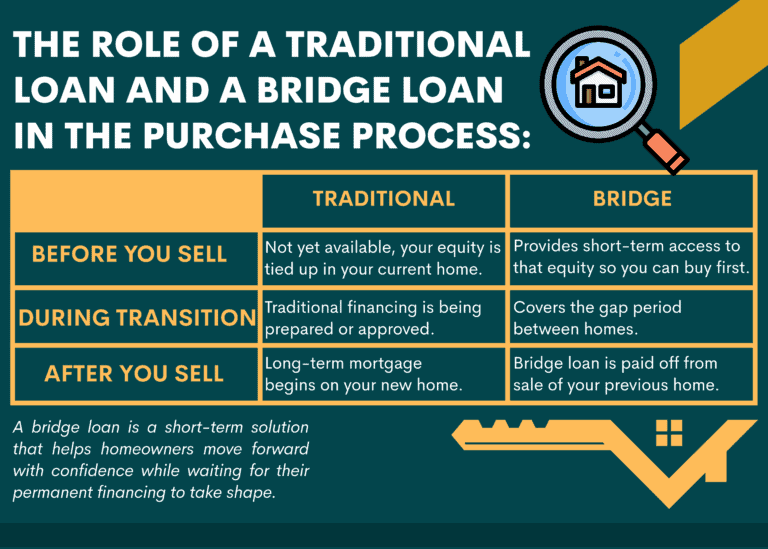
An owner-occupied bridge loan is a short-term loan that helps homeowners buy a new home before selling their current one. It “bridges” the financial gap between two transactions, allowing you to move forward with your purchase even if your home equity is still tied up in your existing property.
Unlike traditional mortgages, bridge loans are typically interest-only and short-term, up to 11 months. They’re designed for speed, flexibility, and convenience when timing matters most—such as in competitive markets or when contingencies might make an offer less appealing to sellers.
An owner-occupied bridge loan specifically applies when the borrower lives in (or is going to live in) the property being financed. Because the loan involves a primary residence, it’s subject to additional consumer protections and underwriting requirements compared to investment or business-purpose loans.
Benefits of our California Bridge Loans
Our California Bridge loans can simplify complex real estate transitions. Homeowners use them in situations like:
- Buying before selling: When you’ve found the perfect new home but haven’t sold your current one.
- Avoiding contingent offers: Staying competitive in a seller’s market.
- Downsizing or upsizing: Using existing equity to transition smoothly.
- Relocating for work: When timing doesn’t align between buying and selling.
- Remodeling before move-in: Financing updates or improvements before occupying the new property.

Industry Professionals
join our mailing list here
Key Features and Terms of our Bridge Loans in California
While every lender’s program differs, most owner-occupied bridge loans share the following characteristics:
Loan Term:
Up to 11 months (short-term, interim financing).
Payments:
Interest-only, keeping monthly payments manageable.
Collateral:
Current home, new home, or both.
Income:
Typically no income requirements.
Funding Speed:
Quick, usually between 21-30 days
Credit:
More flexible than conventional loans.
Rate Type:
Fixed-rate structure; no adjustable or variable components.
Loan-to-Value:
Commonly up to 65–70% combined on both properties.

an Owner-Occupied Bridge Loan In 5 Steps
Contact
Step 1: Application & Pre-Approval
The borrower applies with a direct lender like Vantex, providing details on both their current and intended new property. The lender reviews equity, income, and exit strategy to issue a quick pre-approval.

evaluate
Step 2: Property Evaluation & Terms
A valuation of the property is obtained to confirm property value. The lender finalizes loan terms, typically offering interest-only payments and a term up to 11 months.

Close
Step 3: Loan Closing
Once closed, the borrower now owns both homes, and can put their energy to selling the departing residence, and moving into their new home.

Transition
Step 4: Transition Period
The borrower moves into the new home while the former property is listed and sold. Monthly interest-only payments keep costs manageable during this short-term period.

Payoff
Step 5: Sale & Payoff
When the previous home sells, sale proceeds are used to pay off the bridge loan in full or partially. Any remaining equity is retained by the borrower, and traditional long-term financing (if needed) begins on the new home.





Alternatives to Bridge Loans
Example Scenario: A couple owns a home valued at $1,650,000 with a $300,000 mortgage balance. They find a new home listed at $2,000,000, but their equity is tied up in the current property.
Using a $2,000,000 bridge loan, secured by both homes, they can now close on their new purchase. After their existing home sells, they use the sale proceeds to pay down the bridge loan and pay off the existing mortgage, and are left with an approximately $700,000 balance, which they can now easily refinance into permanent long-term financing.
This approach allows them to move seamlessly, avoid double moves, and remain competitive in the purchase process.


How the Alternatives Might Have Played Out
1. Making an Offer Contingent on the Sale of Their Current Home
- What Happens: Their offer depends on selling their existing home first.
- Result: In a competitive market, sellers often reject contingent offers in favor of buyers who are already financially ready to close. The couple risks losing their dream home.
2. Selling First, Then Renting Temporarily
- What Happens: They sell their existing home and rent short-term while shopping for the next property.
- Result: This eliminates financial overlap, but creates stress, moving twice, storing belongings, and potentially paying inflated short-term rent. The couple is also at the mercy of the market’s timing.
Related Hard Money & Financing Insights
Key Takeaways
- Bridge loans help homeowners buy before they sell, offering flexibility and peace of mind.
- They’re short-term, equity-based loans, ideal when timing and liquidity don’t align.
- Borrowers with significant equity and a clear exit strategy are best positioned to benefit.
- Understanding the process and structure ensures smoother transactions for both homeowners and real estate professionals.

FAQs about our California Bridge Loans
Because you intend to live in the property, the loan is subject to strict federal and state consumer protection laws, including Dodd-Frank compliance. This means we must verify your ability to repay (ATR) the loan, which makes the underwriting process for owner occupied bridge loans slightly more rigorous than our purely asset-based investment loans.
Absolutely. A bridge loan provides the liquidity to purchase your new primary residence free of home-sale contingencies. This allows you to make a highly competitive, cash-equivalent offer in a hot market and sell your old home on your own timeline. For business-purpose funding, check our commercial hard money loan options.
While consumer regulations require us to look closer at your financial profile than we would for an investment property, we are still far more flexible than a conventional bank. We focus heavily on the equity you have in your current property and your clear exit strategy (such as the impending sale of your old home).
Yes, if your current home has substantial equity, we can place a lien on it to secure the funds needed for your new purchase. This structure is a primary benefit of owner occupied bridge loans, completely eliminating the need for a massive cash down payment.
Once your previous residence sells, the proceeds are routed through escrow to pay off the bridge loan. If any balance remains on the new property, you can easily refinance the remaining amount into a conventional, long-term mortgage. For non-owner occupied rehabs, review our residential hard money loan guidelines.
If you’re considering a bridge loan in California for yourself or a client, it’s important to understand the structure, timing, and qualification details upfront.
If you’d like to learn how a bridge loan from Vantex Capital Group bridge loan lenders in California might fit your situation, click here or use the contact form to the right!
Kit V.
10 out of 10 ! As a SoCal real estate pro, was incredibly impressed by the quick loan decision making, speed of execution, and simple transparent communications. Thank you Mike Z. and the Vantex team for making the funding so easy.
Narbik B.
I've known Vantex Capital Group for over 10 years, and I’ve had the pleasure of working with Walter Payne during that time. Walter is an absolute powerhouse—fast, reliable, and always delivers on his promises. When he says he’ll get something done, you can count on it. He and his team stand out from the rest of the mortgage brokers in the industry. I highly recommend Walter and his team at Vantex Capital Group!
Anthony G.
Mike Zweig was very easy to engage. Walked me through every step of the process. Kept me informed and made the experience completely painless while enabling a great sense of ease throughout the process.
I would highly recommend working with Mike and his team at Vantex to assist with your financial needs.
L Kao
Easy to work with. No problems with contacting Vantex for questions, refinancing and loan extensions. However, the loan servicer FCI was very problematic and picky, so I had to document check payments via US post office postmark so they would credit properly. This loan was in probate. So the process could have been different than what other experienced.
Bonnie D.
Mike was so patient and calm to talk to. He explained everything so I could understand. I highly recommend him and his company!
