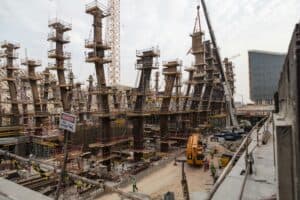

The California real estate market is undergoing a historic and rapid transformation. Recent shifts in the global economy, combined with long-term changes in remote workforce habits, have left significant amounts of office buildings and retail centers sitting vacant across the state. Major metropolitan areas, particularly Los Angeles and San Francisco, are currently experiencing some of the highest commercial vacancy rates in recent history. However, instead of seeing empty square footage and obsolete architecture, visionary real estate investors see a massive opportunity.
Adaptive reuse is quickly becoming one of the most lucrative strategies for modern developers. By transforming struggling, outdated retail spaces into localized industrial hubs or converting empty high-rise buildings into in-demand multifamily housing, investors are breathing new life into local communities. Sourcing the right adaptive reuse financing california projects require is a critical first step for any developer looking to capitalize on this trend. Navigating these complex heavy construction conversions is not a simple task. To successfully reposition distressed commercial assets, you need an agile, specialized financial partner who completely understands the vision behind your blueprints.
Table of Contents
- The Financing Disconnect: Why Conventional Banks Fall Short
- Unlocking Property Potential Through Private Bridge Capital
- The Strategic Edge of Agile Lending in a Competitive Market
- Navigating California Zoning and Municipal Entitlements
- Managing Construction Draws and Scope of Work Underwriting
- The Importance of a Well-Defined Exit Strategy
- Partnering With Commercial Hard Money Lenders in California
- Seize the Adaptive Reuse Opportunity with a Trusted Partner
- Frequently Asked Questions
The Financing Disconnect: Why Conventional Banks Fall Short
Identifying a highly profitable commercial conversion opportunity is only half the battle. The real challenge often lies in securing the necessary capital to close the deal and fund the heavy renovations. When real estate investors bring a distressed asset acquisition to a traditional banking institution, they are typically met with a towering wall of corporate bureaucracy. Standard banks are simply not equipped to handle the unique demands of a major property transformation.
Conventional banks operate on strict, backwards-looking underwriting guidelines. They rely heavily on existing historical cash flow, current tenant occupancy rates, and pristine personal credit metrics. If you are trying to acquire a completely vacant office building or a severely distressed neighborhood retail center, a traditional bank will almost immediately disqualify the property. Because the asset is not currently generating income, corporate lenders view the transaction as entirely too risky. They ignore the future potential of the finished project.
Furthermore, the sluggish nature of traditional banking creates a massive hurdle for active investors. Institutional underwriting requires multiple committee reviews and can easily take several months to complete. This delay frequently causes investors to lose out on competitive, time-sensitive property acquisitions. In a fast-paced commercial market, dealing with a slow financial institution often means watching a prime deal slip away to a faster buyer.

Unlocking Property Potential Through Private Bridge Capital
Direct private financing offers a powerful, common-sense alternative to the rigid constraints of traditional banks. Rather than obsessing over current occupancy rates or historical tax returns, our team at Vantex Capital focuses entirely on the future. We utilize an asset-based underwriting model that evaluates the overarching business plan and the After Repair Value of the property in question. We want to know what the building will be worth once your vision is fully realized.
This forward-thinking approach provides incredible flexibility for borrowers taking on complex commercial conversions. Whether your project involves major city zoning overhauls, heavy construction needs, or complete property repurposing, a direct private lender can structure a financial solution that fits your exact construction timeline. Securing a non stabilized commercial bridge loan gives you the capital required to purchase the distressed property immediately and confidently fund the necessary renovations.
By prioritizing the intrinsic value of the real estate itself, private lenders empower developers to take on ambitious, high-yield projects. If you are seeking short-term capital that California real estate professionals rely on for speed, our asset-centric approach ensures you get the funding you need without the institutional friction. A reliable commercial bridge structure acts as the perfect financial tool to seamlessly link the initial asset acquisition with final property stabilization.
Q: How do private lenders determine the After Repair Value for a commercial conversion?
A: Private lenders rely on commercial appraisals that analyze comparable stabilized properties in the local market. The appraiser reviews the proposed architectural plans, the finalized scope of work, and projected market rents to calculate exactly what the building will be worth once all renovations are complete and the asset is fully leased.
The Strategic Edge of Agile Lending in a Competitive Market
Speed and adaptability are your greatest weapons when bidding on distressed commercial real estate. Property sellers prioritize buyers who can close a transaction quickly with minimal contingencies. When you partner with experienced private bridge lenders, you gain the distinct advantage of rapid closing times. This speed allows you to compete directly with aggressive all-cash buyers, institutional funds, and large syndications to secure prime assets before they ever hit the broader market.
Acquiring the property is just the beginning of the journey. The ultimate goal is to elevate the asset and create lasting, generational value. Utilizing a value add commercial real estate loan provides the crucial financial runway needed to execute your heavy renovations, stabilize the property, and secure long-term tenants. Once the building is fully occupied and generating consistent, reliable cash flow, you are perfectly positioned to refinance out of our short-term bridge capital and step into a long-term, lower-rate permanent mortgage.
A standard residential fix and flip lender may only understand simple cosmetic upgrades. Repositioning a massive commercial building requires a much deeper level of specialized expertise. You need a financial partner capable of matching your speed while understanding the unique nuances of commercial zoning, adaptive reuse ordinances, and heavy construction draw schedules. By securing a flexible private commercial loan, you ensure your project remains well-funded from the initial demolition phase all the way through to final tenant occupancy.

Navigating California Zoning and Municipal Entitlements
California enforces some of the strictest building codes and zoning ordinances in the country. Changing the designated use of a commercial building from office space to residential units triggers heavy municipal oversight. Developers must navigate the California Environmental Quality Act, secure new use permits, and satisfy local planning commissions. These entitlement processes are notoriously unpredictable and can stall a project for months.
Institutional banks strongly avoid this type of municipal uncertainty. They demand fully entitled, shovel-ready projects before they will even consider an application. If a developer needs capital to acquire a building while simultaneously working through the zoning changes, they must rely on private bridge debt.
Private capital recognizes that securing entitlements creates massive intrinsic value. We provide the acquisition funding necessary to lock down the property while your architectural team manages the city planning departments. This specific financial flexibility is what separates successful commercial developers from those who constantly miss out on lucrative repositioning opportunities. Once the entitlements are secured and the building permits are issued, the property inherently becomes significantly more valuable.
Q: Can a developer roll the interest payments into the commercial bridge loan?
A: Yes. Many commercial bridge structures include an interest reserve built directly into the total loan amount. This mechanism covers the monthly debt service during the heavy construction phase, ensuring the developer does not face severe out-of-pocket cash constraints while the property is vacant and generating no income.
Managing Construction Draws and Scope of Work Underwriting
Commercial conversions demand rigorous project management and highly structured capital disbursement. Transitioning a large commercial space into a new use category requires extensive mechanical, electrical, and plumbing upgrades. These infrastructural changes must meet updated municipal building codes. Standard retail lenders lack the internal infrastructure to manage weekly or monthly construction payouts for such intense scopes of work.
Private lenders manage these capital requirements through controlled construction holdbacks. We evaluate the proposed Scope of Work line by line. As the developer completes specific milestones on site, an independent inspector verifies the physical progress. We then wire the next phase of construction capital directly to the project account. This structured release of funds protects the overarching equity of the property while ensuring contractors remain paid and motivated.
Understanding the difference between Loan-to-Cost and Loan-to-Value metrics is critical during this phase. Private capital typically limits exposure based on the final stabilized value of the asset. This allows developers to cover the majority of their hard construction costs using the lender's money, preserving their own liquid reserves for operational contingencies and unexpected permitting delays.
The Importance of a Well-Defined Exit Strategy
Every successful commercial repositioning project relies on a clear, mathematically sound exit strategy. Private bridge debt is explicitly designed as a short-term financial tool, typically spanning twelve to thirty-six months. It is not intended to serve as permanent financing. Therefore, developers must know exactly how they plan to pay off the loan before they break ground on the renovations.
The most common exit strategy for a heavy value-add commercial project involves refinancing into long-term institutional debt. Once the property renovations are complete, the municipal certificate of occupancy is issued, and the building reaches a stabilized tenant occupancy rate of eighty-five percent or higher, the asset becomes highly attractive to conventional commercial banks. The developer secures a permanent commercial mortgage at a lower interest rate and uses those funds to pay off the short-term private bridge loan.
Alternatively, developers may choose to sell the stabilized asset on the open market. Institutional buyers, real estate investment trusts, and high-net-worth family offices actively search for fully renovated, income-generating commercial properties. Selling the finished project captures the forced appreciation immediately, allowing the developer to realize a substantial profit and move on to their next acquisition. Private lenders carefully analyze these proposed exit routes during the initial underwriting phase to ensure the overarching business plan is fundamentally secure.
Q: What happens if municipal permit approvals take longer than the original loan term?
A: Private asset-based lenders understand that municipal delays happen frequently. If a project stalls at the city planning desk but the developer is actively communicating and managing the issue, private lenders can typically structure a loan term extension to provide the necessary timeline runway without forcing a default.
Partnering With Commercial Hard Money Lenders in California
Executing a massive property transformation requires far more than just raw capital. It requires a dedicated, knowledgeable financial ally. At Vantex Capital, we operate as a boutique private lender specifically designed to support complex, heavy value-add projects. We do not farm your application out to a faceless corporate committee. We are a direct California hard money lender, meaning all of our lending decisions, property valuations, and underwriting processes happen entirely in-house.
We offer a consultative, investor-first approach that directly contrasts with the slow and frustrating experience of dealing with giant corporate banks. When you bring your business plan to our team, here is what you can expect:
- Rapid Turnaround Times: Because we manage our own funds, we can often provide preliminary loan approval within the exact same day. This allows you to move forward on competitive bids with total confidence.
- Highly Flexible Term Lengths: We recognize that major renovations take time. We customize the duration and structure of your financing to match the realistic timeline of your specific construction project.
- Asset-Based Underwriting: We care primarily about the protective equity in the real estate and your ultimate exit strategy, not minor blemishes on your personal credit report.
- Deep Localized Knowledge: We hold a profound understanding of state real estate trends, neighborhood demographics, and recent zoning shifts. We truly recognize the potential of your vision.
For instance, finding the right office to residential conversion loan california developers need is a highly specialized process. Because we are actively engaged in the local market alongside active hard money lenders in Los Angeles and a dedicated San Francisco hard money lender, we understand the incredible upside of these exact projects, especially given the state's ongoing housing shortages. When you need specialized capital to make distressed properties profitable again, our team has the direct funds readily available to deploy.

Seize the Adaptive Reuse Opportunity with a Trusted Partner
The current surplus of underutilized commercial spaces represents an incredible opportunity for savvy developers. Transforming an obsolete retail center, a vacant warehouse, or an empty high-rise into a thriving, modernized space yields massive upside potential and revitalizes the surrounding community. However, realizing that potential always requires reliable, fast-moving capital.
Having an agile, direct private lender makes the critical difference between a stalled vision and a highly profitable portfolio addition. We are proud to be one of the premier private bridge lenders in the state, delivering the customized leverage investors need to acquire and revitalize distressed properties.
If you are ready to secure bridge capital for large-scale conversions, it is time to connect with our lending professionals. We encourage you to contact Vantex Capital today. Let us discuss your next visionary acquisition, review your business plan, and strategize the exact private financing you need to bring your commercial project to life.
Frequently Asked Questions
How does private asset-based lending differ from conventional bank financing?
Traditional financial institutions rigidly focus on historical credit scores, past tax returns, and current property cash flow. This makes it incredibly difficult, if not impossible, to fund vacant or distressed buildings through standard channels. At Vantex Capital, we evaluate the underlying equity and the future potential of the real estate itself. This asset-focused approach allows us to provide a highly consultative and customized borrowing experience tailored precisely to your specific business plan and construction goals.
What are the general equity requirements and funding limits for a commercial rehab loan?
We actively avoid the rigid, one-size-fits-all maximums enforced by standard banking institutions. Instead, we offer highly flexible loan-to-value parameters that cater to the unique circumstances of your individual deal. Our team carefully evaluates the specific merits of your project, the detailed scope of work required, and the After Repair Value of the property to determine a sensible, competitive equity requirement that protects both parties.
Can an investor secure capital for a major commercial conversion with a less-than-perfect credit history?
Yes, securing capital is entirely possible even if your financial background has a few past blemishes. Because Vantex Capital utilizes asset-based underwriting, non-traditional income streams or lower credit scores will not automatically disqualify you as a borrower. As long as the underlying commercial asset holds strong intrinsic value, the math makes sense, and you present a viable exit strategy, we are eager to review your loan request.
What is the typical timeline to receive funding for a distressed property acquisition?
Navigating the grueling, months-long timeline of traditional corporate banks can easily cause you to lose a highly competitive deal. In stark contrast, the rapid and agile approval process at Vantex Capital allows you to move with exceptional speed in the marketplace. Because we handle our underwriting, property valuation, and funding directly in-house, we have the ability to close complex commercial transactions in a matter of days. This incredible speed empowers you to capture prime market opportunities before they disappear.
Which types of commercial properties qualify for heavy value-add financing?
Our lending team holds deep expertise in evaluating a diverse range of asset classes across the state. We routinely provide capital for various complex commercial projects, including underperforming retail centers, entirely vacant office buildings, expansive industrial spaces, and unique mixed-use facilities. If you have identified a distressed commercial property with strong repositioning potential and a solid business plan, our team has the specialized knowledge to help you structure the ideal financing package.
Are there prepayment penalties on commercial bridge loans used for property conversions?
Most private commercial bridge loans offer highly flexible prepayment terms. Because these loans are designed for rapid stabilization and refinancing, developers can frequently pay off the principal balance as soon as the project is complete without incurring heavy punitive fees.
How does cross-collateralization work for heavy value-add commercial acquisitions?
If a developer lacks the liquid cash for a substantial commercial down payment, a private lender can place a blanket lien across an existing free-and-clear property the developer already owns. This leverages existing equity to fund the new distressed acquisition without requiring massive out-of-pocket cash deployment.
Do commercial bridge lenders require personal guarantees from all project partners?
While traditional commercial banks typically demand strict personal guarantees from every partner involved in the corporate entity, private asset-based lenders primarily rely on the real estate collateral itself. Non-recourse or limited-recourse structures are often available depending on the loan-to-value ratio and the strength of the asset.
What documentation is required to initiate an adaptive reuse commercial loan?
To expedite the underwriting process, developers should prepare a comprehensive executive summary of the business plan, a detailed line-item construction budget, preliminary architectural drawings, the purchase agreement, and documentation outlining the specific long-term exit strategy.
Can private financing be used to cover soft costs like architectural and engineering fees?
Yes. A properly structured commercial bridge loan can allocate funds for both hard construction costs and necessary soft costs. This ensures that the developer has the capital required to finalize municipal permits, pay engineering consultants, and secure environmental reports.